Chalkbrood, sacbrood and nosema
How to tell chalkbrood, sacbrood and nosema apart from foulbrood, what to do now for each, and whether you must report them in your state.
Chalkbrood, sacbrood and nosema are three established diseases of honey bees. They are already found in Australia and are managed by keeping colonies strong, not by chemicals. Chalkbrood and sacbrood affect brood (the young bees). Nosema affects adult bees; it is covered here because it is often noticed alongside brood problems.
None is an exotic pest, but chalkbrood and sacbrood can look like foulbrood, which is far more serious. Read Telling these apart from foulbrood first.
Quick compare
| Chalkbrood | Sacbrood | Nosema | |
|---|---|---|---|
| Cause | A fungus (Ascosphaera apis) | A virus | Two gut parasites (Nosema apis, N. ceranae) |
| Affects | Brood | Brood | Adult bees |
| What you see | Hard white to grey-black “mummies” | Larvae in a fluid-filled sac, head raised | Few reliable signs: falling numbers, sometimes dysentery streaks |
| When | Spring, cool damp weather | About September to February | N. apis autumn and early spring; N. ceranae all year |
| Confirmed by | Laboratory microscopy | Brood signs; ask your state department | Microscope only |
| Registered treatment | None found | None found | None found |
| Must you report it? | Check the official page | No (BeeAware: established, not notifiable) | WA (N. ceranae): yes. Elsewhere, check the official page |
Chalkbrood
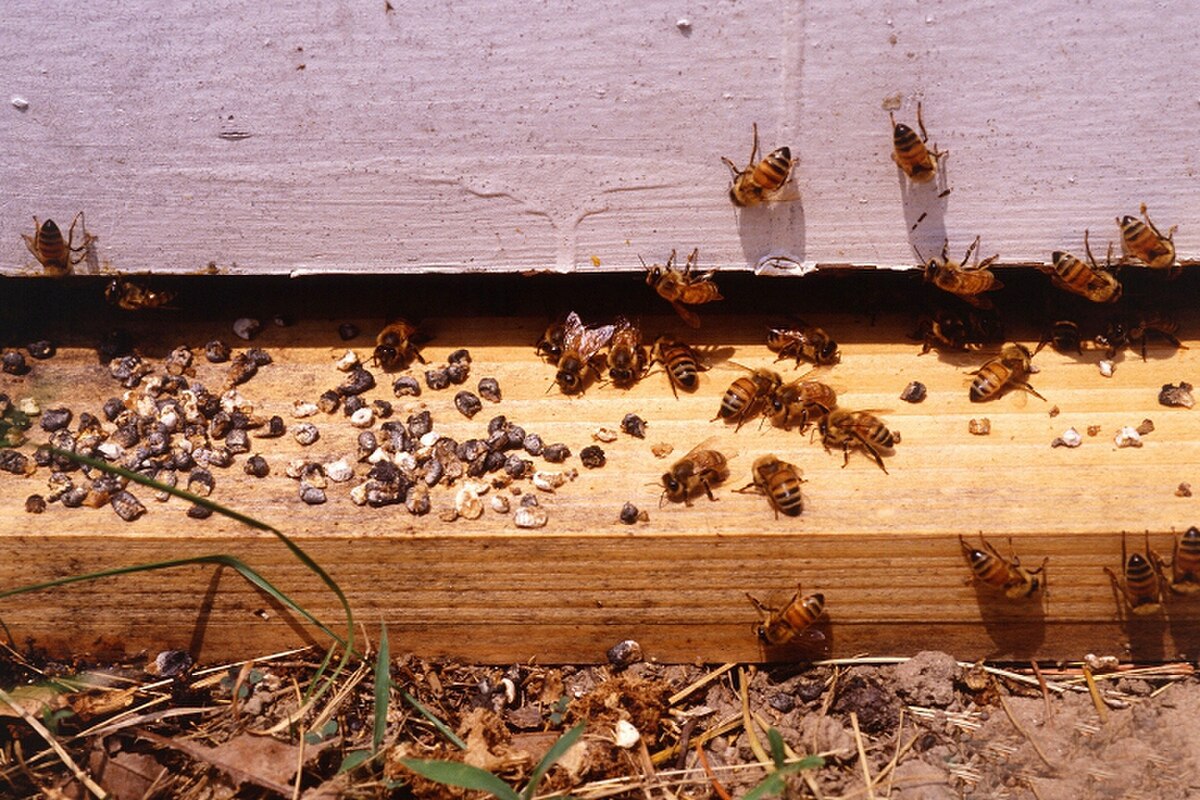

What it looks like. Larvae die after their cells are capped. Workers often uncap the cells, so the pattern looks scattered with sunken, perforated or chewed cappings. Dead larvae dry into hard, shrunken mummies that look like chalk. They rattle when you shake the comb, and turn up on the bottom board and at the entrance.
How to check.
- Look at the brood pattern and cappings on each brood frame.
- Look for mummies on the bottom board and at the entrance.
- If you are not sure it is chalkbrood, treat it as possible foulbrood (below).
What to do now.
- Remove mummies from the bottom board and entrance.
- Replace heavily affected comb, and as routine replace brood comb every three to four years.
- Keep hives dry, sunny and well ventilated, with the entrance facing the sun.
- Keep colonies strong and well fed, and avoid stress. Requeen from reputable stock, ideally bred for hygienic behaviour (bees that find and remove diseased brood).
- Clean tools, smokers and boots between apiaries.
Treatment. No registered chemicals were found. Management is the control. Signs often show only during cold, damp spells, and healthy colonies usually cope. Spores can stay viable in and around hives for years, so equipment can carry the disease.
Sacbrood
What it looks like. Larvae die shortly after capping, stretched out with the head raised. The body turns from pearly white or grey to yellow, then brown to almost black, and the skin becomes a tough sac that often lifts out whole with tweezers. Business Queensland notes that bees working darling pea or blue gum can show similar signs, which usually stop once they leave those plants.
How to check. Use tweezers to lift a dead larva from a cell. A whole fluid-filled sac points to sacbrood. If the remains are sticky or stringy instead, see the foulbrood section below.
What to do now.
- Colonies often recover once there is good pollen and nectar. Moving to a good flow can help, and weak colonies can be supported with sugar syrup or pollen.
- If more than about 5% of the brood is affected, BeeAware and Business Queensland both suggest requeening from a healthy hive or a hygienic breeder’s stock.
- Remove badly affected combs. Melt them down or store them for at least two months, because the virus survives only a short time without bees.
- Replace brood comb every three to four years.
Treatment. No registered chemicals were found. It is usually mild, but affected colonies can be weakened.
Nosema (adult bees)
What it looks like. There are no reliable signs in the field. You may see a falling population, poor honey production, less brood and poor winter survival, all of which have other causes too. N. apis can cause brown dysentery streaks on combs and the hive front, and bees crawling at the entrance. N. ceranae often causes none of these, only a slow summer decline and heavy winter losses. Both Business Queensland and BeeAware say N. ceranae is the more severe.
How to check. Only a microscope can confirm nosema, by examining the gut of adult bees in a laboratory. Telling the two species apart needs a further PCR test. Ask your state department how to send samples.
What to do now.
- Keep colonies strong, with young queens and enough honey and pollen going into winter.
- Replace brood comb every three to four years, and requeen regularly.
- Reduce boxes in winter, and keep hives dry (for example raised off the ground) in a warm, sunny spot so bees can make cleansing flights.
- Avoid unnecessary inspections or moves in winter.
- Clean equipment, or use barrier management.
Treatment. No registered products were found. Control is by management. Use any product only if it is registered for the use on the APVMA register, and follow the label.
Telling these apart from foulbrood
BeeAware and Business Queensland both note that sacbrood and chalkbrood are often mistaken for American foulbrood (AFB) and European foulbrood (EFB). AFB and EFB are far more serious, and AFB is reportable in every state and territory.
- Chalkbrood leaves hard, chalk-like mummies.
- Sacbrood larvae form a fluid-filled sac that lifts out whole.
- AFB and EFB larvae turn to a sticky or liquefied mass, then a dried scale.
- The matchstick “rope” test is only a clue. Foulbrood is confirmed by laboratory microscopy.
You cannot tell these apart reliably by eye. If the brood looks wrong and you are not sure it is one of the diseases above, treat it as possible foulbrood. Don’t move combs, frames or bees between hives, and contact your state department. See Foulbrood and the diagnosis guide.
Do you have to report them?
Rules differ by state and change. BeeAware lists sacbrood as established and not notifiable. For nosema:
| State | What the department says |
|---|---|
| Western Australia | Nosema ceranae is a declared pest and must be reported to DPIRD. |
Chalkbrood rules, and the rules in every other state and territory, were not confirmed for this page, so check the official page for those. See BeeAware’s reporting page and the state rules page.
Related pages
Photo credits
- Chalkbrood mummies at the entrance: Jeff Pettis, Wikimedia Commons, CC BY 3.0 US.
Sources
Every fact on this page was checked against at least two independent sources.
- Chalkbrood diseaseBeeAware (Plant Health Australia)Official
- Sacbrood virusBeeAware (Plant Health Australia)Official
- Nosema (Nosemosis)BeeAware (Plant Health Australia)Official
- Reporting suspect pests and symptomsBeeAware (Plant Health Australia)Official
- Chalkbrood (honey bees and other bees)Business QueenslandOfficial
- Sacbrood (honey bees)Business QueenslandOfficial
- Nosema diseaseBusiness QueenslandOfficial
- Pests and diseases in beesBusiness QueenslandOfficial
- Bee DiseasesNSW Department of Primary Industries and Regional DevelopmentOfficial
- Notifiable bee pests and diseasesAgriculture VictoriaOfficial
- Bee Pests, Diseases and WelfareBiosecurity Tasmania (NRE Tas)Official
- Nosema ceranae declared pestDepartment of Primary Industries and Regional Development (WA)Official
- ChalkbroodExtension Australia (professional beekeepers)Research and industry